


build your own trip
Hot deals

Pre - departure Information


Quick Facts:
Official Name: The Socialist Republic of Vietnam
Population: 84 millio n
Capital City: Hanoi, population 6.5 million (2008)
People: Ethnic Vietnamese (Kinh), 53 difference ethnic minorities include: Muong, Tay, Cham, Montaguard, Khmer......
Language: Vietnamese
Growth: 7, 6% from 2006 to 2008
Religion: Predominantly Buddhist, with Confucianism, Taoism and other minorities.
Currency: Vietnam dong (VND)
Major Industries: Agriculture, Industry and Service
Time Zone: GMT plus 7 hours
Electricity: 220V, 50 Hz AC (some 110V, 50HZ AC) 2 pin plugs
Weights and Measurements: Metric
International Dialing Code: +84

Travel Insurance (compulsory)
Indochina Pioneer Vietnam does everything possible to ensure a safe and enjoyable trip.However, traveling always involves some risk, so we require that you purchase travel insurance to protect you and your possessions against trip cancellation, medical problems, baggage loss or damage. To purchase insurance online, we recommend
www.worldnomads.com. Direct Customers: info@indochinapioneer.com. Website: www.indochinapioneer.com

Passports
You must have a valid passport which expires no later than 6 months after the date you leave Vietnam

Visas
You must have either a letter of approval for a visa or a valid visa on arrival in Vietnam. You can get a Vietnam tourist visa from any Vietnam Embassy or consulate office world wide. Your travel agency can also obtain a visa on your behalf.

Your Health: Preventing Illness
Travelling always involves some health risks, and you should know that when traveling in Vietnam you may be exposed to the following diseases:

Cholera causes severe diarrhea leading to rapid dehydration, which untreated may prove fatal. It is transmitted through contaminated water or food. To avoid risk, eat and drink carefully, choosing cooked food and bottled beverages, including water. There is no effective vaccine for cholera.

Typhoid fever is a potentially life threatening illness usually spread by unsanitary conditions, either person to person or through contaminated water, food or drink. Symptoms include high fever, headache, fatigue, loss of appetite and dizziness. Be careful what you eat and drink (see advice for cholera). Vaccination is recommended.

Hepatitis A is common in developing countries. Infection can be transmitted person to person or through contaminated food and water. Eat and drink carefully. (see advice for cholera). Vaccination is recommended.

Hepatitis B is common in many developing countries. It is spread by sexual contact with an infected person, exposure to contaminated fluids, and use of inadequately sterilized syringes/needles. Avoid casual sexual contact, use condoms, and do not share syringes. If you need a blood transfusion, ask to be taken to a hospital or clinic where you can be sure blood is screened. Vaccination is recommended.

Japanese Encephalitis is a viral disease infecting the brain. It is transmitted by mosquitoes in certain areas of Asia, from India east to Korea, Japan and Indonesia. Make every effort to avoid mosquito bites. Vaccination is recommended for people spending time in rural areas.

Yellow Fever is a viral illness carried by some species of mosquitoes in central and South America and central Africa. Make every effort to avoid mosquito bites. Vaccination is recommended. Some countries require proof of vaccination for travel in certain areas.

Rabies is a rare brain infection that follows a bite, scratch, or lick from an infected animal. It can be fatal if not treated promptly. Be cautions around animals as not all rabid animals behave aggressively. Anyone potentially exposed to rabies must clean the wound and seek prompt medial attention. Vaccination is recommended.

Tetanus is a rare, but potentially fatal disease causing muscle contractions leading to breathing problems. It occurs when a wound, even a trivial one, is contaminated. Keep immunization up to date.

Polio is widespread through Asia, Africa and the Middle East. It can result in paralysis. It is transmitted primarily through contaminated food or water. Be careful what you eat and drink. (see advice for Cholera). Vaccination is recommended

Your First Aid Kit
It’s a good idea to bring a first aid kit stored in a watertight container. You may never need the following items, but it’s good to be prepared.
Triple antibiotic ointment (e.g. Neosporin)
Sterile dressings in varying sizes
Sterile eye pads
Elastic bandage
Assorted adhesive bandage• Aloe Vera gel for burns and frostbite|
Second skin dressings, moleskin, and mole foam for blisters
Tape
Tweezers
10cc irrigation syringe with an 18 gauge catheter tip for flushing dirt from wounds
Blunt tip bandage scissors for cutting clothing near wounds
Antiseptic towelettes (containing benzalkonium chloride) to swab wounds
Wound closure strips or butterfly closures
Benadryl or other antihistamine for allergies and stings
Ibuprofen for reducing inflammation from sprains and strains and for headaches
Latex surgical gloves and CPR micro shield to protect user from infectious diseases
Safety pins
Pepto Bismol or Imodium for stomach upsets
Travel sickness tablets (E.g. gravol)
Waterproof matches, pencil and paper in a sealable plastic bag
Small first aid book

Your Pre - departure Check List
Travel documents (passport, visas, travel insurance certificate, air tickets, tour voucher)
Money (traveler’s cheques, cash, credit card, debit card and money pouch)
Day pack for your personal needs during the day
First aid kit
Medication, including a doctor's letter if you are carrying a large amount of medication
Prescription glasses and contact lens solution if required
Alarm clock
Flashlight
Travel plug/international adapter
Insect repellent
Refillable water bottle and water purification method
Sunscreen, hat and sunglasses
Bathing suit
Lightweight travel towel
Ear plugs/eye mask
Comfortable walking shoes
Local language phrase book (mp3 language downloads available from ?????
Camera, film and/or memory cards with spare batteries
Personal audio player with spare batteries
Raincoat/umbrella
Waterproof jacket
Sleep sheet for homestays/trains (optional)
Tampons (difficult to buy in Vietnam)
Clothes suitable for visiting temples (long pants or long skirts, long sleeved tops)
Warm clothes for winter months. (Nov to Feb

Please note: As domestic airlines impose a maximum baggage weight of approximately 20kg, try to travel light. Also, train cabins and boat cabins in Halong Bay have limited space so pack light and use soft luggage if possible.

Money
The local currency is the VND (dong). Bank notes come in denominations of 100, 200, 500, 1000, 2,000, 5,000, 10,000, 20,000, 50,000, 100,000d and 500,000 dong. Coins come in denominations of 200, 500, 1000, 2000, and 5000 dong. The exchange rate is 18,450 dong to one U.S. dollar (July 2010).

You can exchange currency and
cheques, preferably in U.S. funds, at banks, hotels and authorized money exchangers. Ask for bills in small denominations.Credit cards are generally accepted only in major hotels, and some up-market shops and restaurants in major cities.

There are several international banks in Hanoi and Ho Chi Minh City with 24 hour cash withdrawal facilities, including ANZ Bank in Hanoi and HSBC in Ho Chi Minh City. You can use Visa and Master cards and debit cards (e.g. Cirrus). Please note that the Vietnamese Dong is non-convertible outside Vietnam, so change it or spend it before you leave!

Departure airport taxes
Your international and domestic tickets include departure tax.

Arriving in Vietnam
You will be asked to complete an arrival card which you submit, along with passport and visa, to Immigration Department officials and Customs officers. The exit portion is torn off and returned to you. You will need to present this when you leave the country.

From the Airport to Your hotel. If you have not arranged for an Indochina Pioneer representative to meet you at the airport, here’s what to do:

In Saigon: You can exchange currency for your taxi fare at the airport, however, some drivers accept U.S. currency. The exchange rate is 18,800 to $1 U.S..Hire a metered taxi outside the terminal. The journey should cost roughly $7U.S. including toll fee. Tan Son Nhat airport is about 7km northwest of the city center.

In Hanoi: Go to the Noi Bai Taxi rank outside Arrivals on the left. The fare to central Hanoi for a four seat taxi is about $????U.S. or 230,000 dong. Noi Bai airport is approximately 35km north of the city.
Direct Customers: info@indochinapioneer.com. Website: www.indochinapioneer.com

The Climate
The Vietnamese climate is variable and differs widely from north to south and within regions. Flooding may cause minor alterations to trip itineraries.

The North (from Hanoi to Sapa):
Winter spans December through February. It can be cool in Hanoi and mountainous regions, with overnight temperature of 4 Celsius and daytime highs between 10 and 20 Celsius. Summer is from June to August and brings hot and humid conditions. The average temperature range is 27 to 30 Celsius.

climate_north_vietnam.jpg

The Center (from Nha Trang to Hue):
For most of the year Nha Trang is bathed in sunshine but in November and December there is heavy rain. Dalat, at an altitude of 1,500m, is cooler than the coastal area, particularly from November to March. Danang and Hue both experience typhoon activity from mid October to mid December when the climate becomes cooler, more overcast and wet.

The South (from Ho Chi Minh City to Phan Thiet):
The dry season is from December to June with March to May being particularly hot and humid. The temperature ranges from 27 to 30 Celsius. The wet season with short and heavy rain showers is from July to November.

climate_south_vietnam.jpg

Direct Customers:
info@indochinapioneer.com. Website: www.indochinapioneer.com

Safety
Vietnam is considered one of the safest destinations in Asia. Women and independent
can travel easily here. Petty theft and purse snatchings sometimes occur, especially in the larger centres. The usual precautions are recommended: keep your bags zipped and close to you at all times. Do not carry large amounts of money. Keep some money in your hotel safe. When you are away from your hotel, you should remember to carry bottled water, toilet paper, a copy of your passport/visa/travel insurance/some limited cash/credit card cancellation numbers, your first aid kit, medications and hotel card. And don’t forget your camera.

Food and Beverage
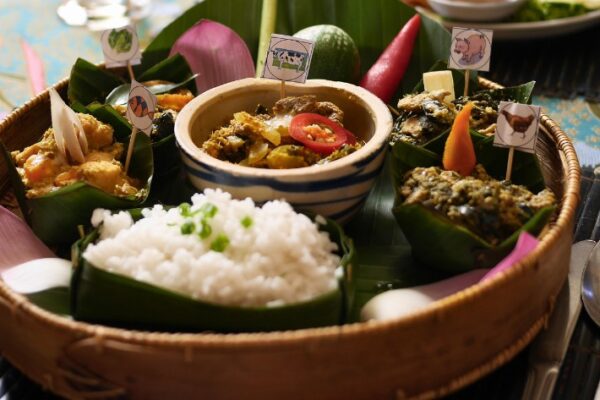
Travellers to Vietnam love the food! It's style is unique, relying on quality and seasonally fresh ingredients rather than added spice. The traditional Vietnamese breakfast is Pho – a bowl of rice noodles flavored with sliced beef or chicken and fragrant broth, garnished with fresh coriander and bean sprouts. Excellent and well priced seafood is available throughout the country. Duck, chicken, beef, and lean pork are also featured on most menus, as well as fresh salads and vegetable dishes and delicious legacies from the French colonial period.

The Buddhist influence also means lots of vegetables. Bottled mineral water, soft drinks, and Vietnamese tea and coffee are readily available. Beer, usually a light larger style, is the main alcoholic drink. The local rice wine (ruou gao) is popular with many Vietnamese.. Just remember, do not drink (or even brush your teeth) with tap water. Use bottled water instead. It is safe to have ice in your drinks, and there is no need To avoid fruits and vegetables. Strict vegetarians should make it clear that they do not eat meat and fish as either may be included in vegetable dishes.
Direct Customers:
info@indochinapioneer.com. Website: www.indochinapioneer.com

Clothing
We recommend light, comfortable, easy to launder clothing. It can be cool during Hanoi’s winter and the rainy season in the central region, so a sweater or light jacket will come in handy. Thermal underwear is a must you are trekking in winter. You will need good walking shoes and sandals that can be easily removed for visiting temples and private homes. Your knees and shoulders should be covered when you are entering a temple.

Responsible Tourism
Please read our Responsible Travel Guidelines in “About us” before you arrive in Asia. We hope our visitors will travel responsibly to ensure a sustainable future.

Etiquette
Body language: You should know that most Asian people believe that the head is the most important part of the body. To touch a Cambodian or Laotian or some Vietnamese people on the head is a grievous insult. Conversely, the feet are the lowest and the dirtiest part of the body. To point your feet at someone is an insult. To point your feet at an image of
is unforgivable. Women should never touch monks and avoid sitting next to them on public transport.

Begging: Because of land mines, war and corruption, many Cambodian and Vietnamese people have turned to begging. We ask that instead of giving to beggars, you support a community agency providing support services to people in need.

Hawkers: Please be courteous to the many hawkers we encounter along the way. The number of people selling sarongs, crafts, and transport is far greater than the number of tourists. Please respect that they are only trying to make a living. Never promise to buy later unless you really will!

People: Most of the population is Viet or Kinh (85%), people who speak Vietnamese as their mother tongue. The balance consists of 54 ethnic hill tribe peoples who live manly in the central and northern mountainous areas of the country. The best-known hill tribes are the Tay, Hmong, Zao, White and Black Thai, both mainly from the north, and the Hoa, Khmer, mainly in the South). Each tribe has its own customs and dialect and some speak fluent Vietnamese as well.

Language
Vietnamese is a difficult language to learn. Based on tonal variations, it is difficult for a short term traveler to speak easily. It comes from the Chinese, although the two languages have diverged. Vietnamese has six tones, so a word can be said six ways, imparting six different meanings. There are also regional variations, so what is polite in Saigon may be just the opposite in Hanoi. In the 17th century, Alexander de Rhodes. Jesuit scholar and missionary, created the romanized script which was used only by the educated. In 1954, under Ho Chi Minh, the romanized script became the official written script for the Vietnamese language. Today, English is the most common second language in Vietnam, so someone is sure to help you out. And, even though it is a difficult language, give it a try. your efforts will be appreciated.

Public holidays
It seems that there is almost always a celebration happening in Vietnam. Here are some dates when businesses and banks may be closed.
Vietnam New Year – “Tet” – usually late January/ February – varies with the lunar calendar. (Celebration lasts for about a week, banks closed for five days).

January 1st – New Years Day
June 1st – Children’s Day
Jun 27 – Memorial day for War Martyrs
August 19th – August Revolution 1945
September 2nd – National Day
May 1st – International Labour

February 3rd – Founding of the Communist Party
March 8th – international Women’s Day
March 26th – Youth Day
April 30 – Liberation of Saigon (national holiday)
November 22nd – Army Day
May 19th – Ho Chi Minh’s Birthday

Direct Customers: info@indochinapioneer.com. Website: www.indochinapioneer.com

Tet, the lunar New Year
Of all holidays, the Vietnamese Lunar New Year is the most important. Families reunite in the hope of good fortune for the coming year, ancestral spirits are welcomed back into the family’s home and everyone becomes a year older.

Like Chinese Lunar New Year, Tet comes between mid January and mid February. It is officially a three day celebration which may extend to a week. Preparations begin weeks in advance. The rites begin a week before New Year when the three spirits of the health and kitchen gods ascend to the heavens (riding fish) to report the events of the past year to the Jade Emperor. All over Vietnam live carps are released into rivers, lakes. Alters are laden with food, flowers and bowls of live carp are readied for the kitchen gods’ departure in hopes that the gods will take favorable reports with them. Families visit cemeteries to invite the spirits of dead relatives home for the celebrations. Houses and offices are cleaned and decorated, debts are paid and great attention is paid to attitudes and actions on New Year’s Day as these set the tone for the coming year.

Communications
By Mail: Through the Vietnamese postal system you can find services such as: EMS (Express Mail Service), DHL Worldwide Express, UPS, Freight Forwarders. We suggest that you not put postcards into letter boxes; but rather give them to your hotel staff to post, or take them to a post office.

Email & Internet access: Internet-service providers operate in most cities. You can access the internet through hotels, Cyber Cafés & Internet/Computer Service Centers (~95% are using ADSL) located in many streets of the major cities.Direct Customers:
info@indochinapioneer.com. Website: www.indochinapioneer.com

Telephone Calls: You can use pre-paid card phone services for your hand phone. The Sim card costs around $5.00 U.S. Prepaid cards come in denominations of 100,000, 200.000 and 300.000 dong. You can buy them at shops and book stores. The best international rates are through post offices with a pay per call service and a fax service. The cost is about $0.50 U.S.per minute to most countries. For lower cost, dial 171 (or 178) + 00 + country code + city code + number.

Remember, you cannot make collect calls from Vietnam. A popular and cheaper option is to make phone calls over the Internet, an option offered by many internet cafes. If you use this service from your hotel’s telephone, the charge might be a little higher as the hotel will add a service charge.

Mobile Phones: In Vietnam, GSM (Global System for Mobile communications) is presently operated by three main suppliers: VINAPHONE, MOBIFONE and Viettel. Your mobile phone could be used here by roaming service. These suppliers offer also VINA and MOBI Pre-Paid Card services. The best way for you to use a mobile phone in the country is to buy a pre-paid SIM card for your mobile phone. You can also rent a mobile phone at your hotel or at a Mobile Phone Service Center in the street.

Business hours
Government agencies work Monday to Friday from 7:30 hrs to 16:30 hrs (excluding one-hour lunch) and are closed Saturday and Sunday. Banks are open Monday to Friday from 7:30 hrs or 8:00 to 11.30 hrs and from 13:00 hrs to 16:00 hrs and are closed Saturday and Sunday. Private shops are open from 8:00 or 8:30 hrs to 21:00 or 11:00 hrs


Tipping
If you are happy with services provided by your local guides and drivers, a tip, though not compulsory, is appropriate. While it may not be customary to you, it is of great significance to the people who will take care of you during your travels, it inspires excellent service, and is an entrenched feature of the tourism industry across destinations. Here are our suggestions;

Meals (restaurants): the average amount is $1
Guides: We recommend $2-$5 per day for local guides (depending on group size),
Drivers: You will have a range of drivers on your trip. Some will be with you for a short journey while others may be with you for few days. We would recommend a higher tip for those more involved with the group however a base of $1 to $2 per day would be appropriate (depending on group size).
Bellboy: the average amount is $1
Chambermaid: the average amount is $1 per day. For larger groups and adventure trips you may want to increase this. But please remember that it’s totally up to you, these are guidelines onl.

Recommended Reading

Guide Books:

Vietnam – Insight Guides
Vietnam – A Travel Survival Kit
Vietnam The RoughGuide

Child of War, Women of Peace – By Le Ly Hayslip
When Heavens and Earth change place
The Sorrow of the War – By Bao Ninh


History Books:

A Bright Shinning Lie – By Neil Sheehan
Vietnam a History – By Stanley Karnow
Turtle Beach – By Blache d’Alpuget
Bridge Across My Sorrow – By Christina Noble
Two Cities, Hanoi & Saigon – By Neil Sheehan
A Retrospect – ByRobert MC Namara
One Crowded Hour – By Tim Bowden
Live from the Battle Field – By Peter Arnett
 

Best Buys
The list of bargains is endless, but to whet your appetite, here are a few examples: Silk painting, silk sheets, silk shirts, t- shirts, coffee filters, ground coffee, tea, ceramics, embroidered pictures, and table cloths, marble carvings, lacquer-ware, rattan
, beaded bags and shoes, a new season wardrobe tailored in Hoi An and so much more…….!

And Finally…
Indochina Pioneer facilitates your holiday by arranging all services making up your trip. Here are some suggestions to ensure that your adventure meets and hopefully exceeds your expectations:

Please read our guidelines on responsible tourism so that your trip is beneficial both for you and the communities you visit.
Let us know your special interests (weavings, archaeology, religious art, jewellery) and your interest in specific activities, like mountain biking and kayaking. We want to give you the best holiday possible.
Do some reading about Vietnam before you visit so you know something of its history and culture.
The guides will give you a general understanding of the places you visit, but feel free to ask for specific information.
Try to learn a little Vietnamese before your trip! The more you know the more fun you will have. However, not speaking Vietnamese will not stop you having a great time as English is widely spoken.
Tell us once about any problems, so we can solve them together. Don't wait till the trip is over! Our drivers, operators, guides and hotel staff are there to help you.Try to support locally owned businesses, hotels and restaurants and traditional artisans.
While bargaining is part of the shopping culture in Asia, be realistic!
Bring a book, journal, postcards, or playing cards with you to occupy yourself when waiting.
Remember the adage: “Take only photos, leave only footprints”, but be sensitive with the photos and footprints.
Remember to relax, be patient, and keep an open mind. Bring your sense of humour and adventure and discover the magic of Vietnam! Direct Customers:
info@indochinapioneer.com. Website: www.indochinapioneer.com

Also see